
Seestar S30 Pro Review: A Smart Telescope That Opens the Night Sky to Beginners
In Partnership With HighPointScientific.com! A quick note on how this review came together: I was able to test the Seestar S30 Pro thanks to a partnership with High Point Scientific. They provided the unit for review and were so amazing to work with. Everything below — the praise and the criticism — is my own honest take after real nights under the stars.
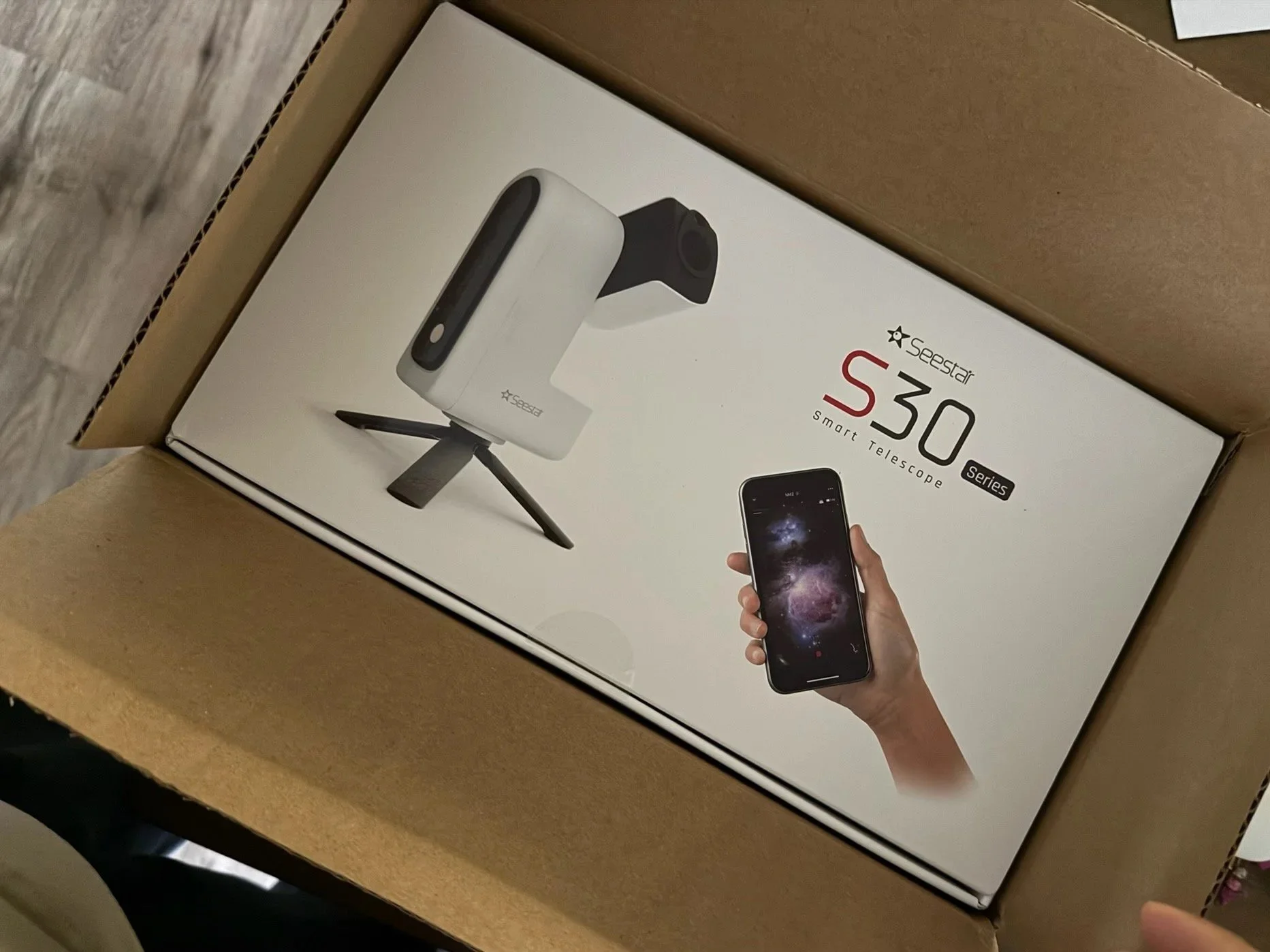
Nothing better than opening a fresh telescope!
I've spent 15+ years chasing light, from dark-sky sites in Central California to the fjords of Iceland. Most of my deep-sky work happens on a tracked telephoto rig that takes real effort to set up, align, and dial in. So when a fully automated, pocketable smart telescope landed on my desk, I was genuinely curious: could something this small and this simple actually deliver — and who is it really for?
After several sessions with the Seestar S30 Pro, I have a clear answer. This is one of the most compelling on-ramps into astrophotography I've used, and it's a fantastic tool for learning the night sky. It also has a limitation that more experienced shooters should understand before they buy. Let's get into it.
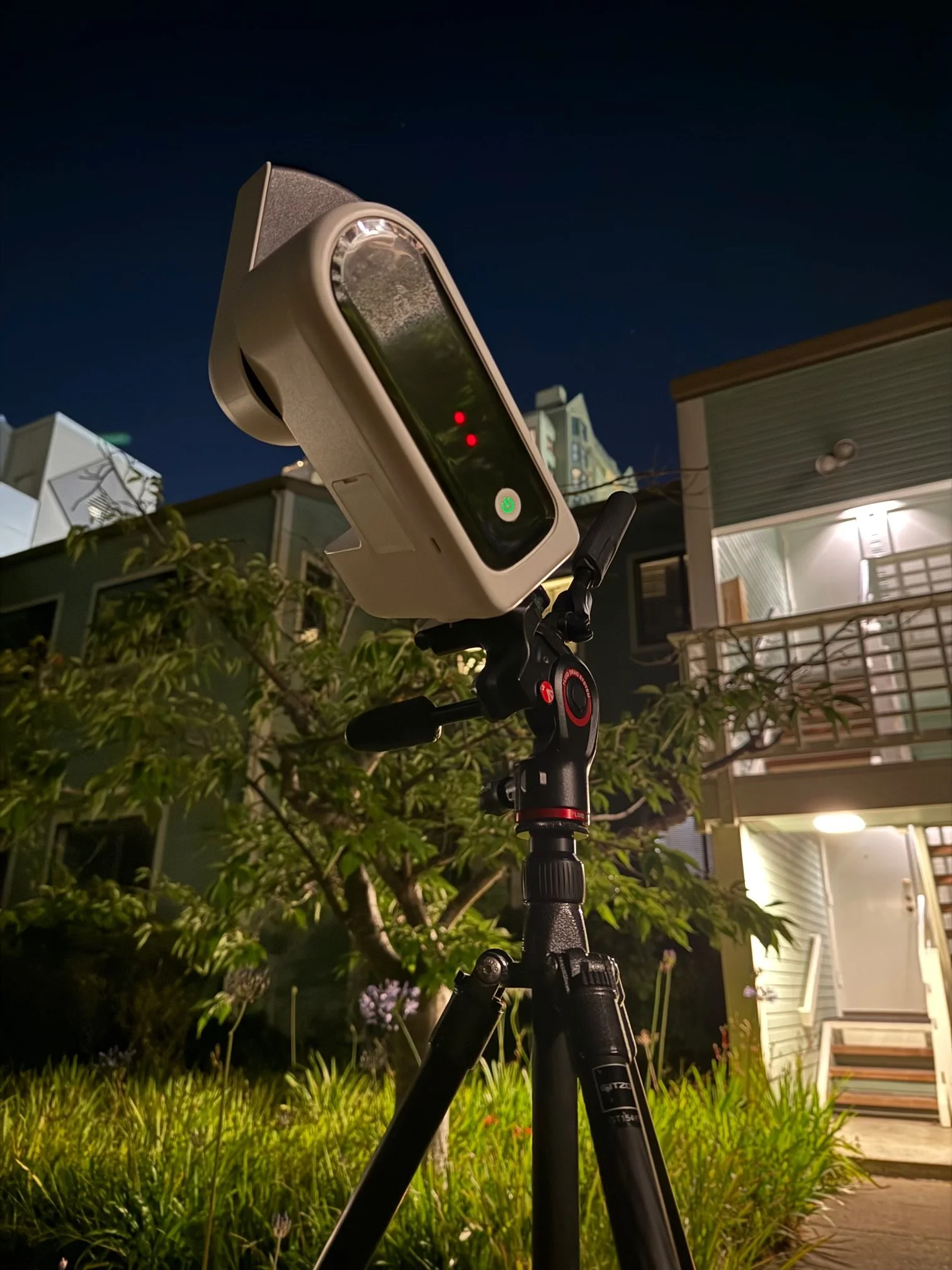
Seestar S30 Pro Setup and ready to shoot from San Francisco, CA.
What the Seestar S30 Pro Actually Is
The S30 Pro is an all-in-one "smart telescope." There's no polar alignment, no separate mount, no laptop, no tangle of cables. You set it on the included tabletop tripod, open the app on your phone, pick a target, and it slews, plate-solves, focuses, and starts stacking images automatically. Within a couple of minutes you're watching a nebula or galaxy build up on your screen live.
Under the hood, it's more capable than its size suggests. The main optic is a 30mm f/5.3 quadruplet apochromatic refractor at 160mm focal length, with ED glass for clean color correction. That's paired with a Sony IMX585 sensor(8.29MP, 4K), giving roughly a 4.6° field of view — wide enough to frame big targets like the Pleiades or Andromeda, but with enough reach for smaller objects. On my own sessions I pointed it at targets like the Whirlpool Galaxy (M51) and the Cat's Eye Nebula, and it found and tracked them without fuss.
Key Features Worth Knowing
The "Pro" designation earns its keep here. A few standouts from my time with it:
Dual-camera system. Beyond the main telephoto optic, there's a second wide-angle camera (Sony IMX586, 6mm f/1.75, ~63° field of view) built for the Milky Way, landscapes, and wide nightscapes. This is the feature that pushes the S30 Pro past being "just a telescope."
True automation. GOTO targeting and automatic tracking mean the scope does the hard part. You choose what to shoot; it handles the finding, framing, and stacking.
Built-in filters. An internal filter wheel covers light-pollution suppression, dual-band nebula work, dark frames, and a snap-on solar filter for daytime sun sessions.
Autofocus, anti-dew heater, and RAW support. The heater alone is a quiet lifesaver on damp California nights, and RAW output means you can take the data into Siril, PixInsight, or Lightroom for your own processing.
Genuinely portable. It weighs about 3.6 lbs (1.6 kg), runs up to ~6 hours on internal battery (expandable via USB-C), packs 128GB of storage, and ships with a carry case. It's an easy grab for travel — which, for someone like me who shoots on the road constantly, matters a lot.
Creative modes. Deep-sky, Milky Way, star trails, solar, time-lapse, and daytime landscape modes give you real range from one device.
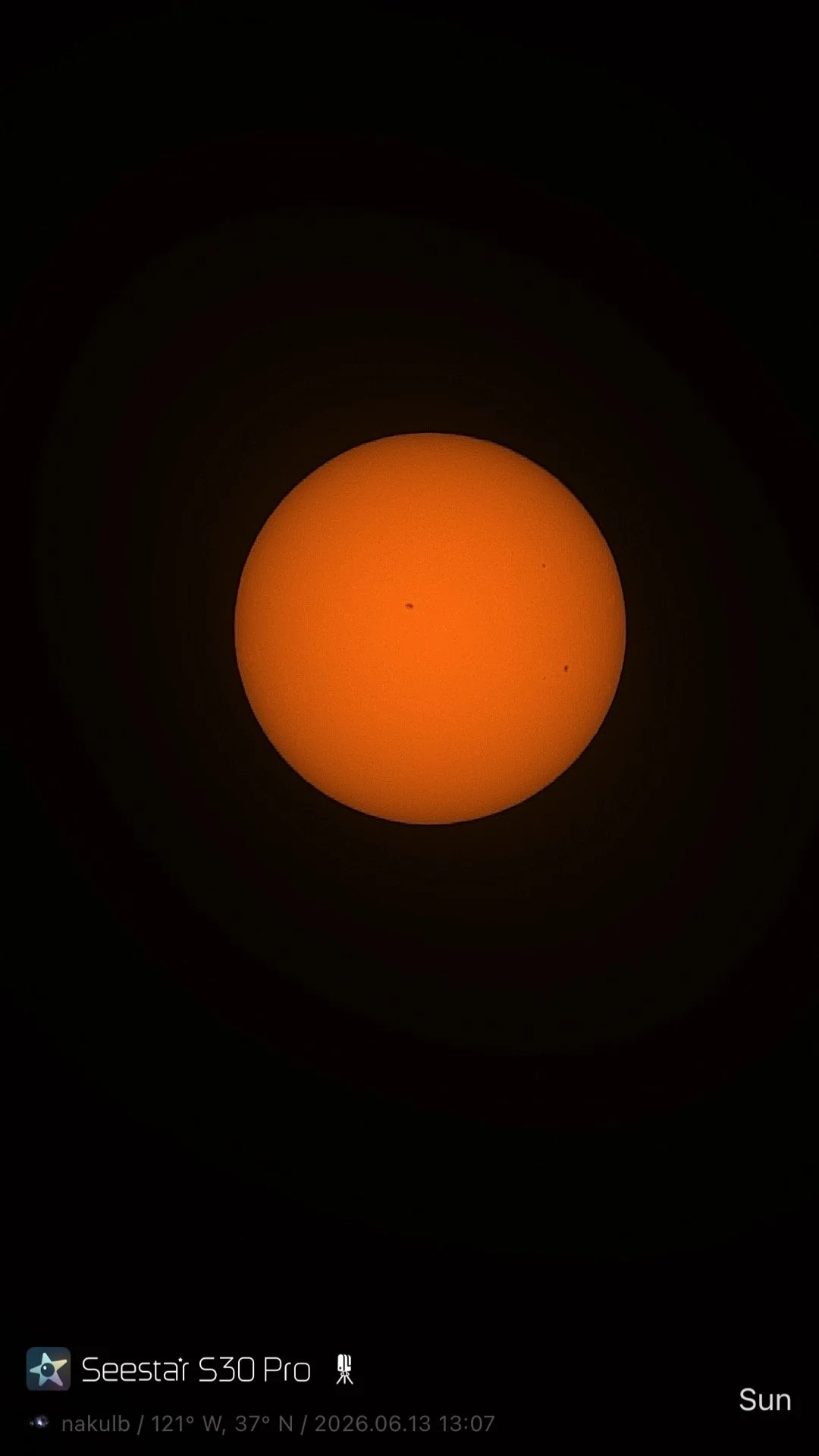
Solar Capture!
Pretty amazing detail and it performed well under the heat!
Why It's a Fantastic Choice for Beginners
If you've ever looked up and wished you could photograph what you were seeing but felt intimidated by the gear, the equipment cost, and the learning curve — this is the device that removes those barriers.
What impressed me most isn't the specs; it's how much the S30 Pro teaches you while you use it. Because it plate-solves and names what it's pointing at, you start to internalize where things live in the sky. You learn which targets are up in which season, what a galaxy looks like versus an emission nebula, how integration time cleans up an image, and why a dark sky matters so much. It turns stargazing into an active, curious process instead of a passive one. For a newcomer, that education is worth as much as the images.
And the images are legitimately good for a scope this size. A beginner can produce a shareable photo of the Orion Nebula on their very first night out. That immediate reward is exactly what keeps people hooked on this hobby.
The Honest Part: Where It Fell Short for Me
Here's where my perspective as a seasoned photographer diverges from the beginner experience.
No matter how many times I ran the focus routine, I struggled to get my stars into full, critically sharp focus. The autofocus would settle on something close — perfectly acceptable for casual viewing and social sharing — but when I pixel-peeped the results the way I do with my own rig, the stars never quite snapped into that tack-sharp, clean point I'm used to fighting for. I tried repeated focus passes across multiple sessions and couldn't reliably nail it.
To be clear about what this means: for a beginner, this is a non-issue. The results look great at normal viewing sizes and on a phone. But if you're an experienced astrophotographer or a working photographer with a trained, critical eye — someone who lives and dies by edge-to-edge sharpness — you'll likely notice the same thing I did, and you may find the limited manual control over focus frustrating. This is, in fairness, a common trade-off with smart telescopes: the automation that makes them so approachable also takes the fine-grained control out of your hands.
So I'd frame it this way: the S30 Pro is an outstanding first telescope and a wonderful travel companion, but it's a complement to a dedicated imaging rig, not a replacement for one.
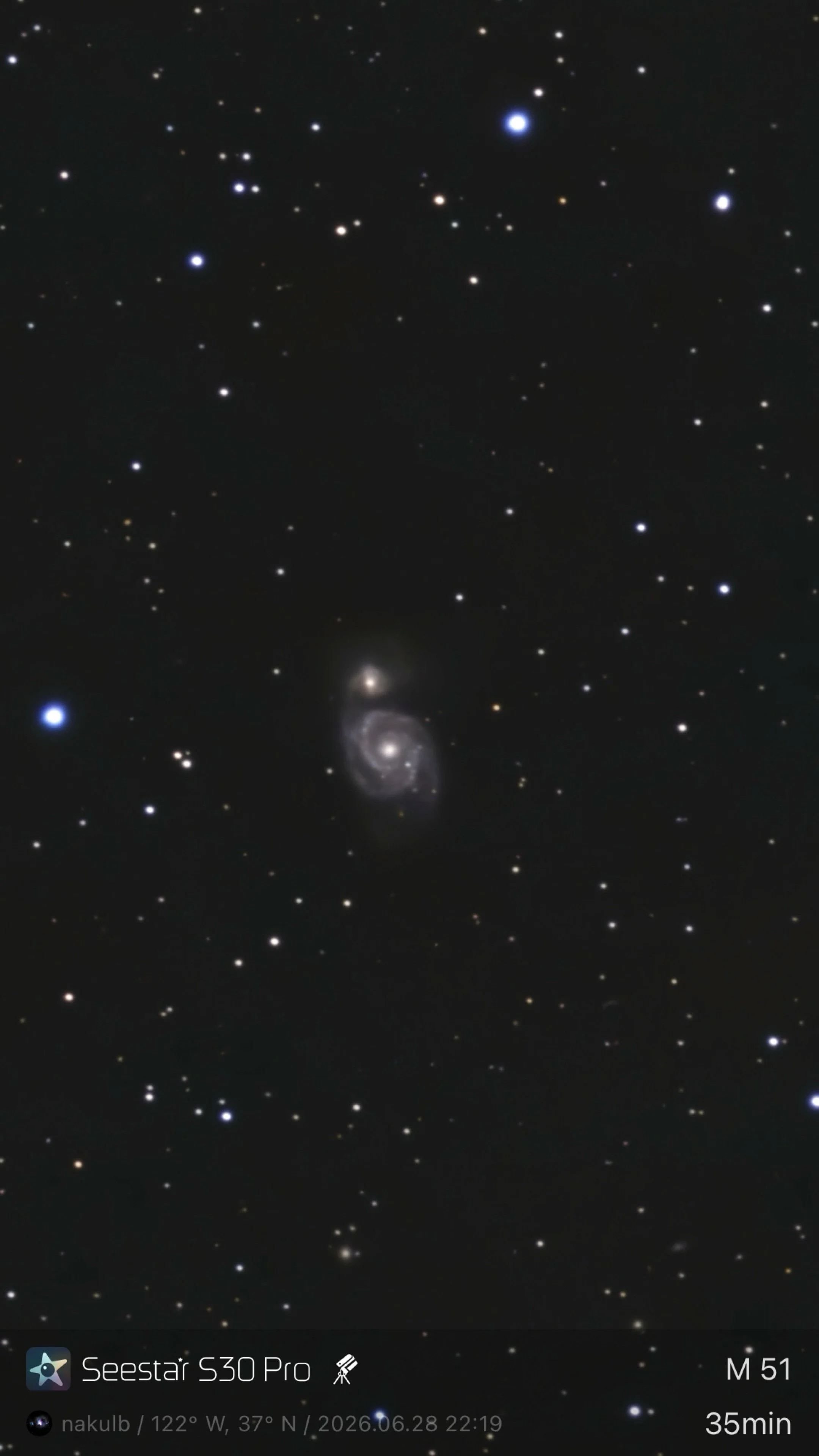
M51
Pretty decent given the little effort I put in for the setup.
Where to Buy It
If the S30 Pro sounds like the right fit — whether you're just starting out or adding a grab-and-go scope to your kit — I'd point you to High Point Scientific. Beyond making this review possible, they're genuinely one of the best places to shop for astrophotography gear. Their catalog is deep, the product information is detailed and honest, and their team actually knows the equipment they sell — which matters enormously when you're navigating a hobby with this much of a learning curve. Whether you need a smart telescope, a full imaging setup, filters, mounts, or just solid advice, they're my recommendation for astrophotography needs.
The Verdict
The Seestar S30 Pro is one of the easiest and most rewarding ways to get into astrophotography that I've come across. It's portable, smart, versatile across deep-sky, Milky Way, solar, and landscape work, and it does a remarkable job of teaching you the night sky as you go. For beginners or frequent travelers, I recommend it enthusiastically.
For seasoned shooters chasing critical sharpness, temper your expectations on focus — but even then, it's a delightful travel scope and a low-friction way to grab data on a clear night. Smart telescopes have come a long way, and the S30 Pro is proof of just how far.
Clear skies…I had very few thanks to Karl the Fog (IYKYK).
-Nakul B.